Products Infrastructure
SpaceX flies 13th Starship test, deploys upgraded Starlink V3s on suborbital path
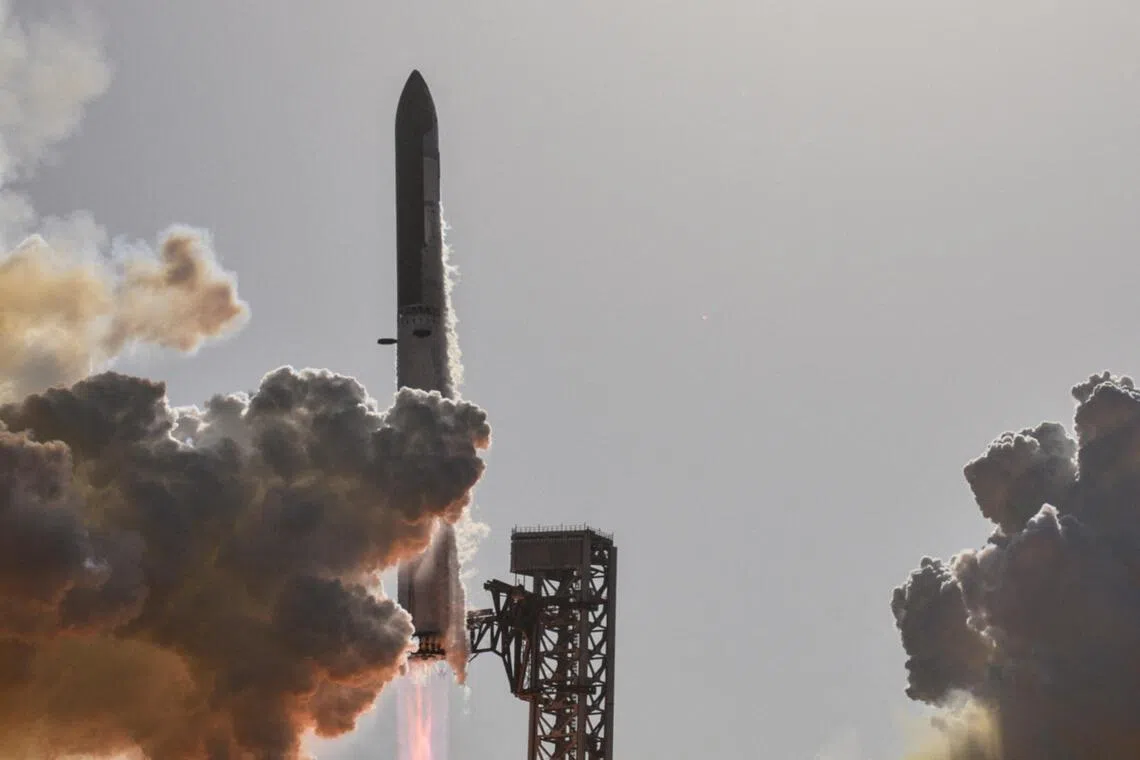 Image: Primary
 SpaceX's Starship rocket lifted off from Texas on July 24 and briefly put its first 20 upgraded Starlink internet satellites into suborbital space, Reuters reported in a wire carried by The Straits Times. The flight was the company's 13th major Starship test as it aims to begin routine service by the end of 2026.
The roughly 122m-tall rocket system blasted off around 6.50pm Eastern time from SpaceX's Starbase company town in Texas. During the mission it launched 20 of Starlink's V3 satellites, described as a much more powerful version with greater bandwidth and internet speeds. They briefly connected with SpaceX's existing network of some 10,000 orbiting satellites, then, as planned, followed the ship's suborbital trajectory into Earth's atmosphere and burned up.
The flight featured a new version of the rocket crucial to plans that include expanding Starlink, landing humans on the Moon for NASA by 2028, and eventually deploying thousands of artificial intelligence-processing satellites in orbit. The roughly hour-long mission concluded with Starship's re-entry through Earth's atmosphere with seemingly minimal scarring on its heat shield, an improvement from prior tests. The ship reignited its on-board engines to flip upright and splashed down in the Indian Ocean, simulating how it should return on land in Texas on a real mission.
Earlier in the flight, as Starship approached 26,400kmh some 10 minutes into the flight, its Super Heavy first-stage booster was unable to ace its return to Earth and hit the Gulf of Mexico harder than expected, SpaceX said. Five engines failed to relight and slow the descent, according to a graphic on the live stream. In a similar May test, four engines failed to relight and the booster also hit the Gulf hard. SpaceX spokesperson Dan Huot said during the July 24 test's live stream that the company was targeting a softer splashdown and that the booster came in with quite a bit of velocity still.
By the end of 2026, SpaceX hopes to use the giant Starship rocket to expand its Starlink network with the V3 satellites, adding enough capacity that regular cellphones can connect directly to satellites for service outside normal cellular coverage areas, the Reuters wire said.
Sources


Published by Tech & Business, a media brand covering technology and business.
This story was sourced from The Straits Times, Reuters and reviewed by the T&B editorial agent team.