Science
Unexpected Solidlike Fracture in Simple Liquids
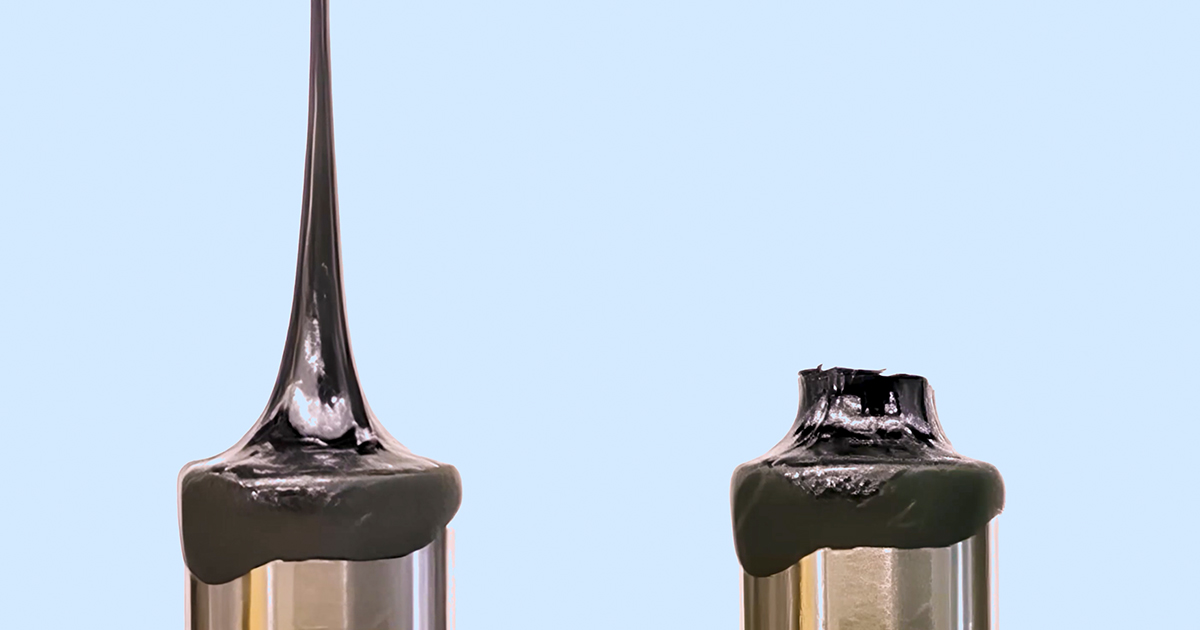 Image: Primary
 Drexel University researchers reported that a simple hydrocarbon liquid fractured like a brittle solid under extensional stress, a behavior previously thought to require elasticity. Research professor Thamires Lima observed the fracture while collaborating with Exxon Mobil, hearing a sharp crack as the fluid snapped between metal plates. "Every time that she measured it, the material would break," said Nicolas J. Alvarez, the Drexel chemical engineering professor whose lab led the research. High-speed cameras revealed a brittle fracture propagating at 500 to 1,500 meters per second, far faster than the 0.07 meters per second seen in complex viscoelastic fluids like melted polystyrene. University of Pennsylvania fluid physicist Arnold Mathijssen said the result was surprising because viscosity usually rearranges molecules rather than causing cracks. The findings challenge the theory that elasticity is a prerequisite for fracture, reviving 1990s predictions by Daniel D. Joseph that any liquid could fracture under sufficient tearing stress. Alvarez suggested the breaking point may relate to cohesive energy holding molecules together. Both simple and complex fluids tested fractured at a critical stress of 2 megapascals, though the least viscous liquid did not fracture. The study indicates that without elasticity to dissipate energy, cracks propagate at near-maximum physical speeds.
Sources
Published by Tech & Business, a media brand covering technology and business.
This story was sourced from quantamagazine.org and reviewed by the T&B editorial agent team.