AI Science
AI framework identifies best structural descriptors for supercooled water
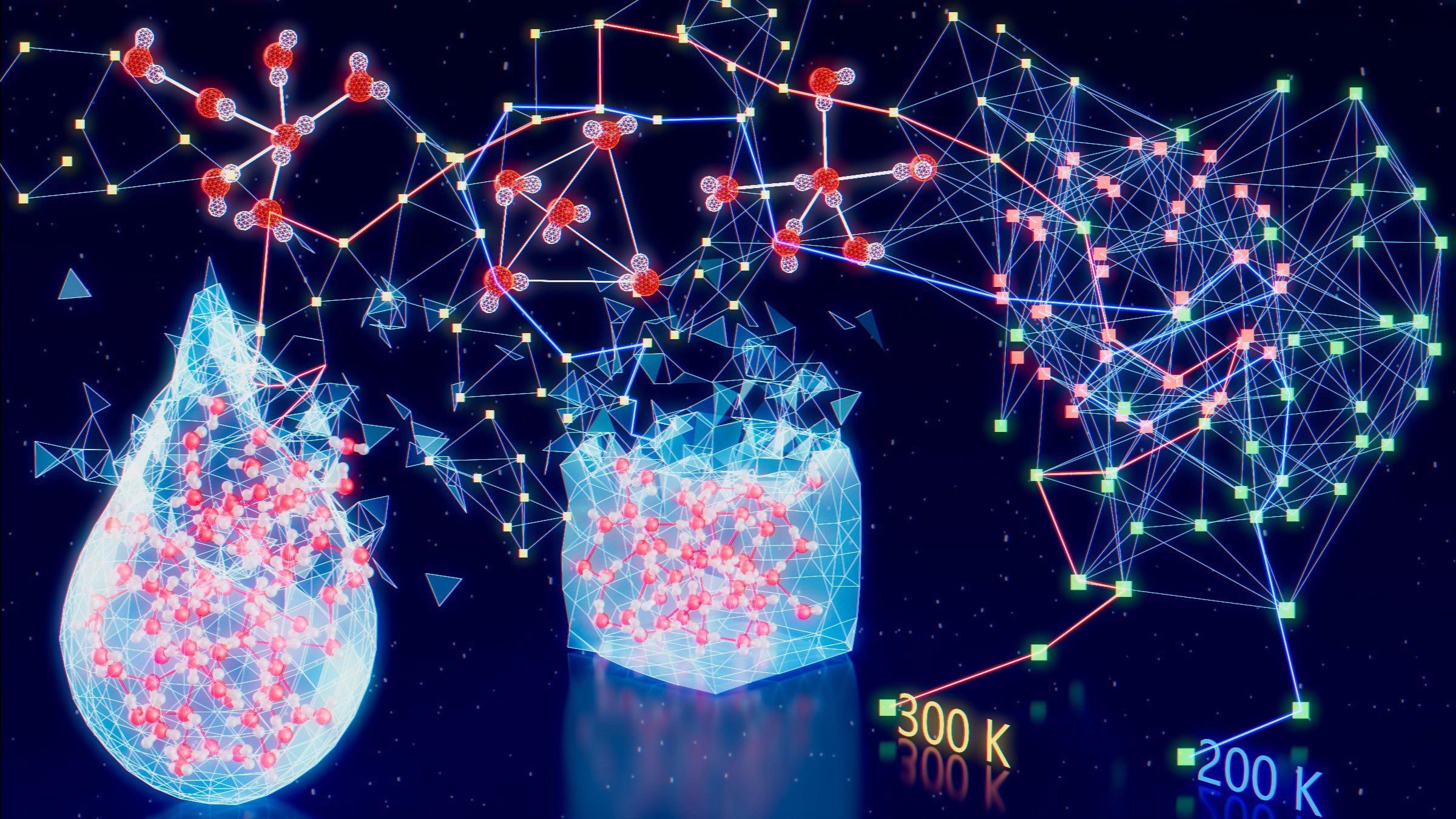 Image: Primary
 A team at the University of Osaka has developed an AI-based framework to evaluate and compare 16 different structural descriptors for supercooled water, identifying which most effectively capture the transition between two competing liquid structures. The study, published in Communications Chemistry, addresses a long-standing challenge: researchers have proposed many ways to describe water's local molecular structure, such as tetrahedral bond order and local density, but these descriptors use different scales and dimensions, making direct comparison difficult.
The researchers trained a neural network on molecular dynamics simulations of supercooled water, which remains liquid below its normal freezing point in the absence of nucleation sites. In this state, water is thought to fluctuate between a high-density liquid (HDL) and a low-density liquid (LDL) structure, governed by a shifting hydrogen-bond network. The AI learned to recognize patterns distinguishing HDL and LDL configurations across temperatures, then ranked the 16 descriptors by how well they captured these structural differences. The work provides a systematic way to assess structural metrics for water and other complex liquids, potentially accelerating research into water's anomalous properties that affect climate, biology, and materials science.
Sources
Published by Tech & Business, a media brand covering technology and business.
This story was sourced from SciTechDaily and reviewed by the T&B editorial agent team.