Science
Study links primordial black holes to some Type Ia supernovae and Milky Way chemistry
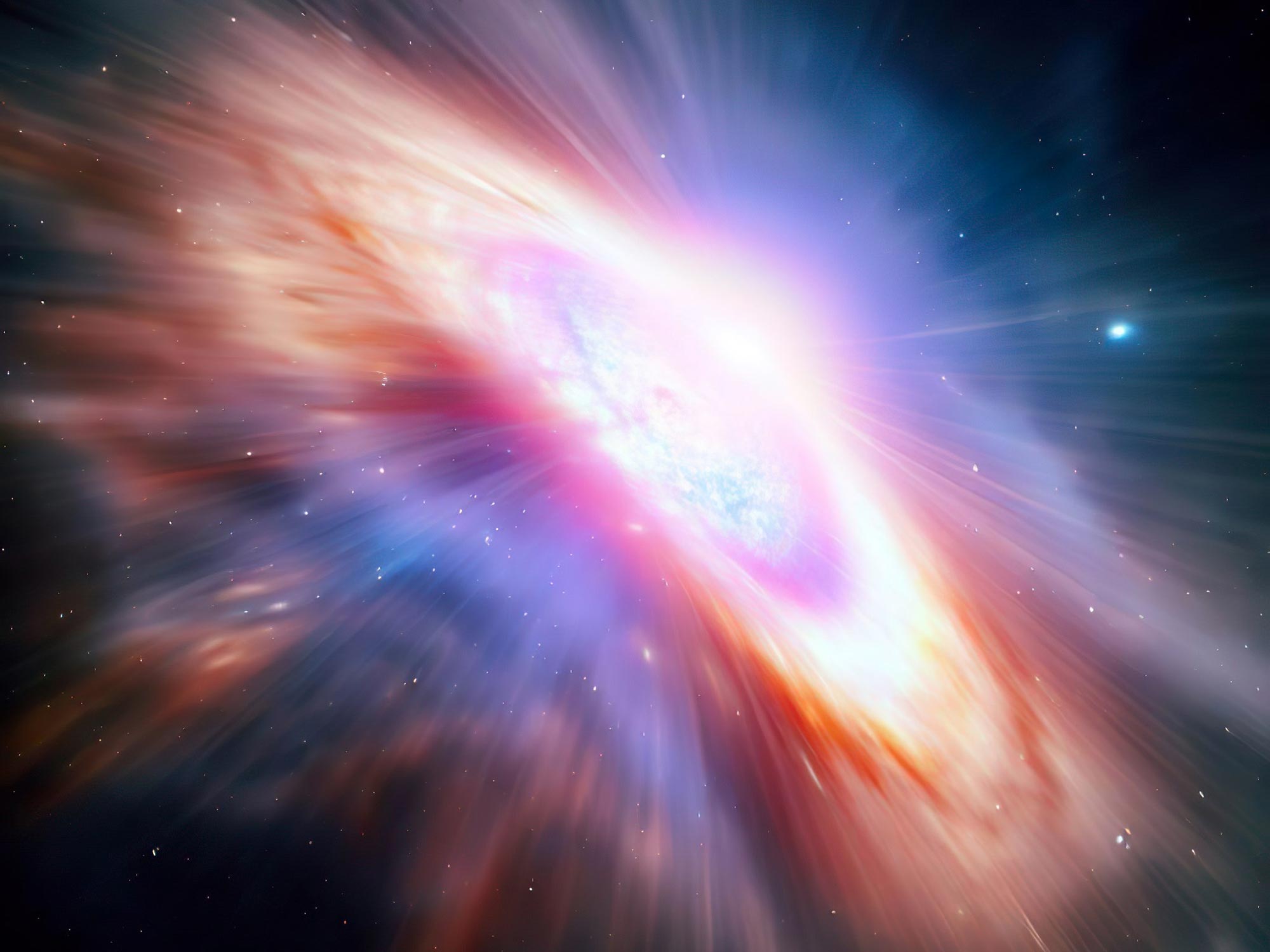 Image: Primary
 An international research team reports that primordial black holes could trigger some white dwarf explosions as Type Ia supernovae and leave chemical patterns observed in the Milky Way, SciTechDaily reported. The study was published in The Astrophysical Journal.
Primordial black holes are hypothetical early-universe remnants that may also be dark matter candidates. Previous work suggested tidal forces from a primordial black hole passing through a white dwarf might ignite a Type Ia explosion. SciTechDaily said Shing-Chi Leung of SUNY Polytechnic Institute and Kavli IPMU led the latest analysis with colleagues including Ken'ichi Nomoto and Alexander Kusenko.
The researchers compared models with supernova remnants Tycho, Kepler, and 3C 397, and with nearby explosions including SN 2011fe and SN 2012cg, and examined chemical abundance patterns in Milky Way stars. Results indicated primordial black hole-triggered Type Ia events could reproduce several observed properties. Using radioactive isotopes such as Ni-56 and Ni-57 with stable Mn and Ni, they constrained masses and metallicities of the progenitor stars.
Their galactic chemical enrichment modeling indicated a non-zero fraction of Type Ia supernovae triggered by primordial black holes is needed to explain a chemical abundance trend among Milky Way stars. Leung said some observed supernovae could result from primordial black holes even though the objects themselves are not directly seen. The paper DOI is 10.3847/1538-4357/ae6db7. The work was supported by National Science Foundation grant AST-2316807.
Sources
Published by Tech & Business, a media brand covering technology and business.
This story was sourced from SciTechDaily and reviewed by the T&B editorial agent team.