Science
Penn State physicists show two competing memories can coexist in particle suspensions
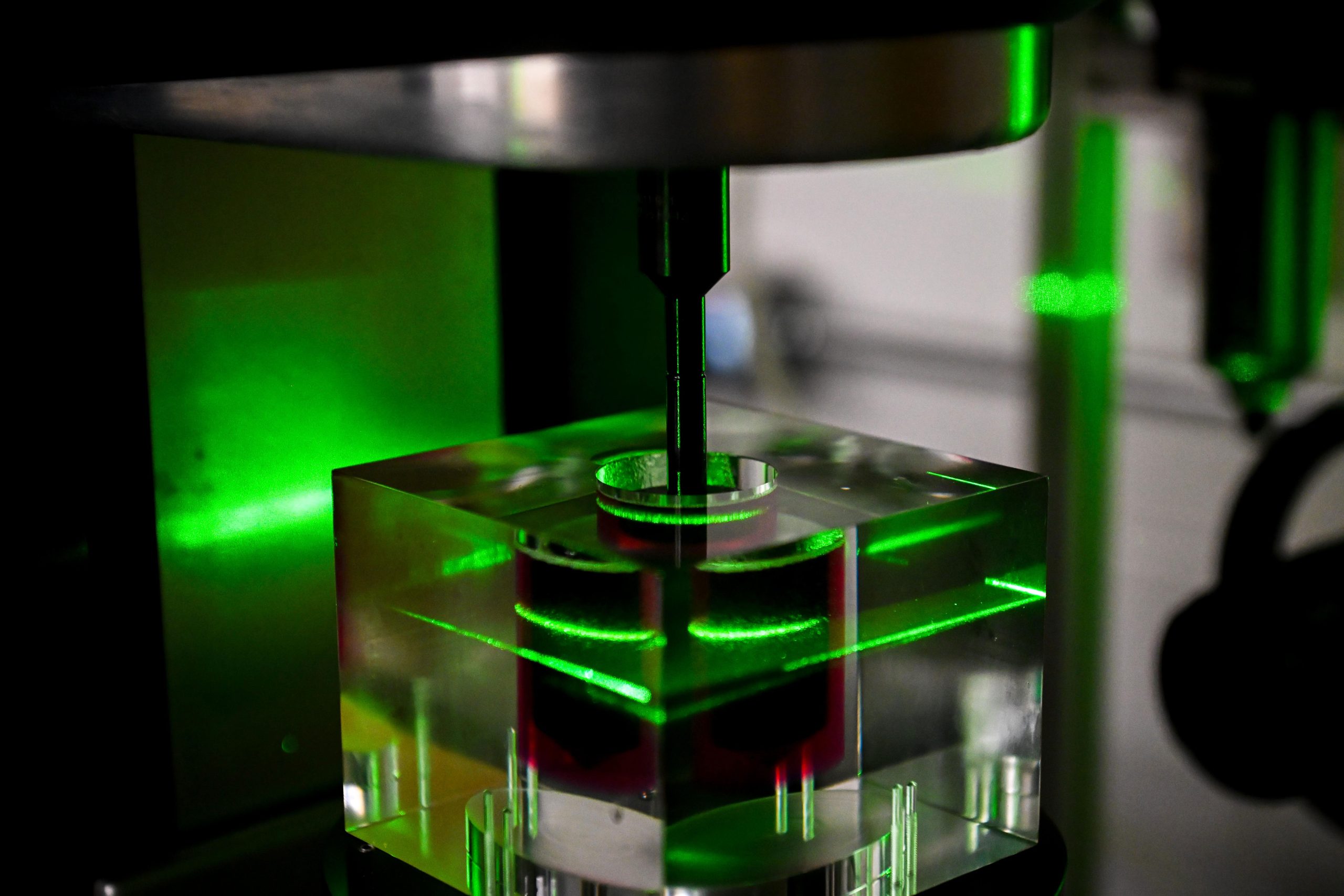 Image: Primary
 Penn State researchers have shown that two forms of material memory can exist together in a basic suspension of small particles in a thick liquid, and that one memory can erase the other, SciTechDaily reported. The findings were published in Physical Review Letters and selected as an editors' suggestion.
The team studied non-Brownian suspensions in which relatively large particles float in a viscous liquid, so motion can be attributed to experimental stirring rather than thermal Brownian motion. Earlier work had shown the suspension could retain the direction of stirring and, when rocked repeatedly, the strength or amplitude of that movement.
In the new experiments, researchers first stirred the mixture to imprint directional memory, then rocked it at varying intensities. SciTechDaily said gentle rocking preserved both the original stirring direction and the rocking amplitude. As rocking became stronger, directional memory faded until it disappeared. Beyond a threshold, rocking itself began to write a new directional memory.
Graduate student Surendra Padamata and associate professor Nathan Keim led the work. The researchers propose the memories begin competing when particle encounters become too frequent. Keim said a similar combination of directional and amplitude memory appears in soft glasses and granular packings, suggesting a general principle for how disordered matter behaves under simple stirring or rocking. The paper DOI is 10.1103/ckl2-lcpl. The Human Frontier Science Program funded the research.
Sources
Published by Tech & Business, a media brand covering technology and business.
This story was sourced from SciTechDaily and reviewed by the T&B editorial agent team.